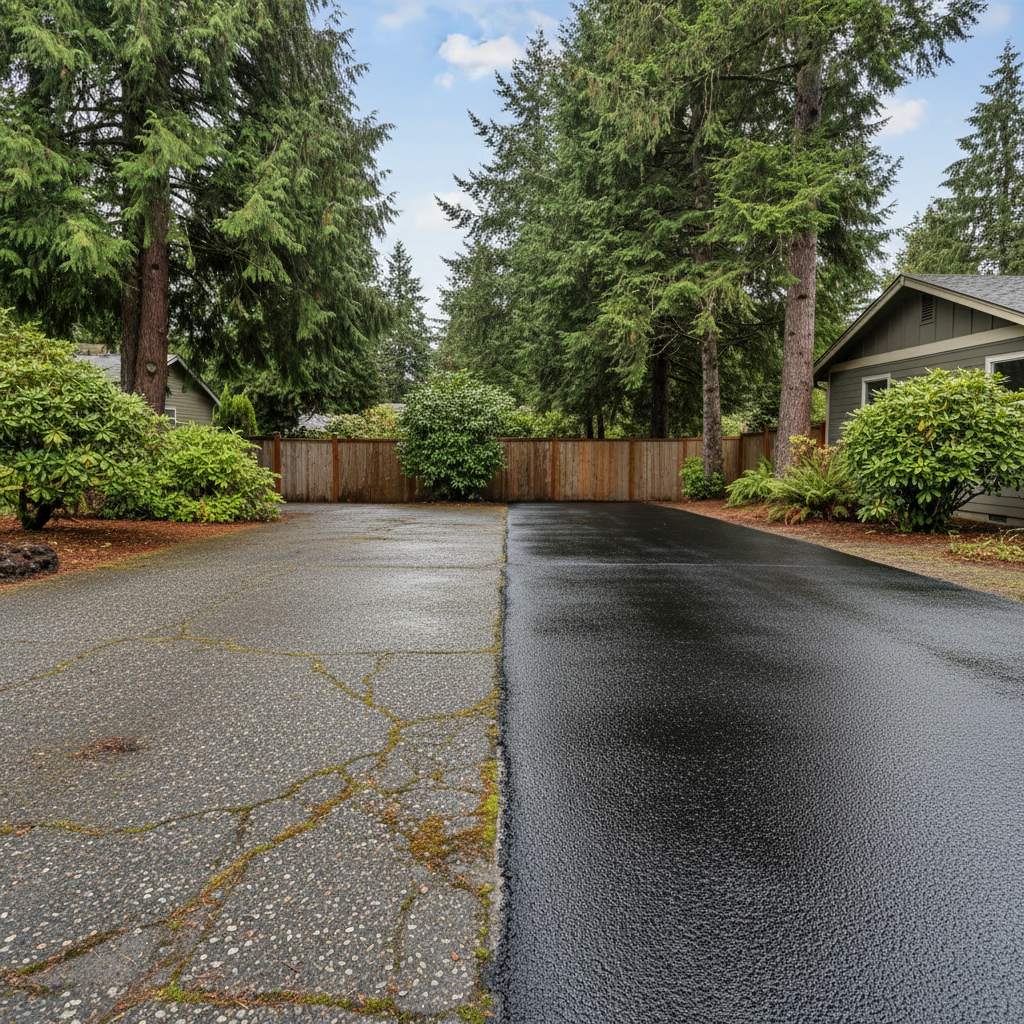
Alright, let's talk about sealing your asphalt driveway. I get a lot of calls from folks around Lakewood, especially in places like the Lake Louise neighborhood where driveways see a lot of foot traffic and tree cover, asking about 'slurry coating.' But here's the thing: not all 'slurry' is created equal. There are two main approaches people usually mean, and knowing the difference can save you a headache and some cash down the road.
What's the Deal with Asphalt Emulsion Sealers?
Most of what you see advertised as a 'sealcoat' or 'driveway sealer' at your local hardware store, or what some less scrupulous outfits might apply, is an asphalt emulsion product. Think of it as a thin, black paint for your driveway. It's basically liquid asphalt mixed with water and some additives to make it spreadable.
Cost: This is almost always the cheaper option upfront. You can buy buckets of it yourself and roll it on, or pay someone a lower price to spray it.
Durability: This is where it falls short. It's a surface treatment, not a structural one. It'll give your driveway a nice dark color for a little while, but it doesn't really add much to the pavement's strength or crack resistance. In our wet Washington winters, it can start to wear thin pretty quickly, sometimes within a year or two, especially on high-traffic areas or if you've got heavy vehicles.
Maintenance: You'll be reapplying it more often. If you want that fresh black look, you're probably doing it every 1-3 years.
Appearance: Looks great right after it's applied – a deep, uniform black. But as it wears, it can start to look patchy and faded.
It's a quick fix, a cosmetic touch-up. If your driveway is in really good shape and you just want to darken it up for a season, it's an option. But don't expect miracles.
The Real Deal: Slurry Seal
Now, when I talk about a 'slurry seal,' I'm talking about something much more robust. A true slurry seal is a mixture of asphalt emulsion, fine aggregates (like sand or crushed rock dust), water, and chemical additives. It's a much thicker, more substantial application than just an asphalt emulsion sealer.
Cost: It's going to cost more than a simple emulsion sealer, no two ways about it. The materials are more expensive, and the application process is more involved, requiring specialized equipment and experienced crews.
Durability: This is where it shines. The aggregates in the mix fill in small cracks and voids, providing a new wearing surface. It's designed to protect your underlying asphalt from oxidation, water penetration, and UV damage. A properly applied slurry seal can extend the life of your driveway by 5-7 years, sometimes even longer, even with our constant rain and freeze-thaw cycles here in Lakewood.
Maintenance: You won't need to reapply it nearly as often. Every 5-7 years is a good general guideline, depending on traffic and how well the original pavement was maintained.
Appearance: It gives a uniform, slightly textured black finish that looks professional and well-maintained. Because it's thicker, it tends to hide minor imperfections better than a thin sealcoat.
Think of it like this: an asphalt emulsion is like painting a rusty car; a slurry seal is like putting on a new, protective layer of primer and paint.
My Recommendation for Lakewood Homeowners
Look, I've been doing this for a long time, and I've seen what works and what doesn't in our specific climate. For most homeowners in Lakewood, especially if you want your driveway to last and look good for years without constant fuss, a proper slurry seal is absolutely the way to go. It's an investment, sure, but it pays off in extended pavement life and reduced long-term maintenance. You're getting real protection, not just a temporary facelift.
If your driveway is showing signs of age – hairline cracks, fading, aggregate loss – a slurry seal can rejuvenate it and guard against further deterioration. It's a proactive step that saves you from needing more expensive repairs or even a full repave down the line.
When you're getting quotes, make sure you're comparing apples to apples. Ask exactly what's in their 'slurry mix.' If they're just spraying on a thin liquid, you're not getting a true slurry seal. At Apex Asphalt Solutions, we make sure our clients understand the difference because we believe in doing the job right the first time. You want something that stands up to the weather, the traffic, and everything else our beautiful corner of Washington throws at it.